emily quandahl is a painter and mixed-media artist based in minneapolis
-
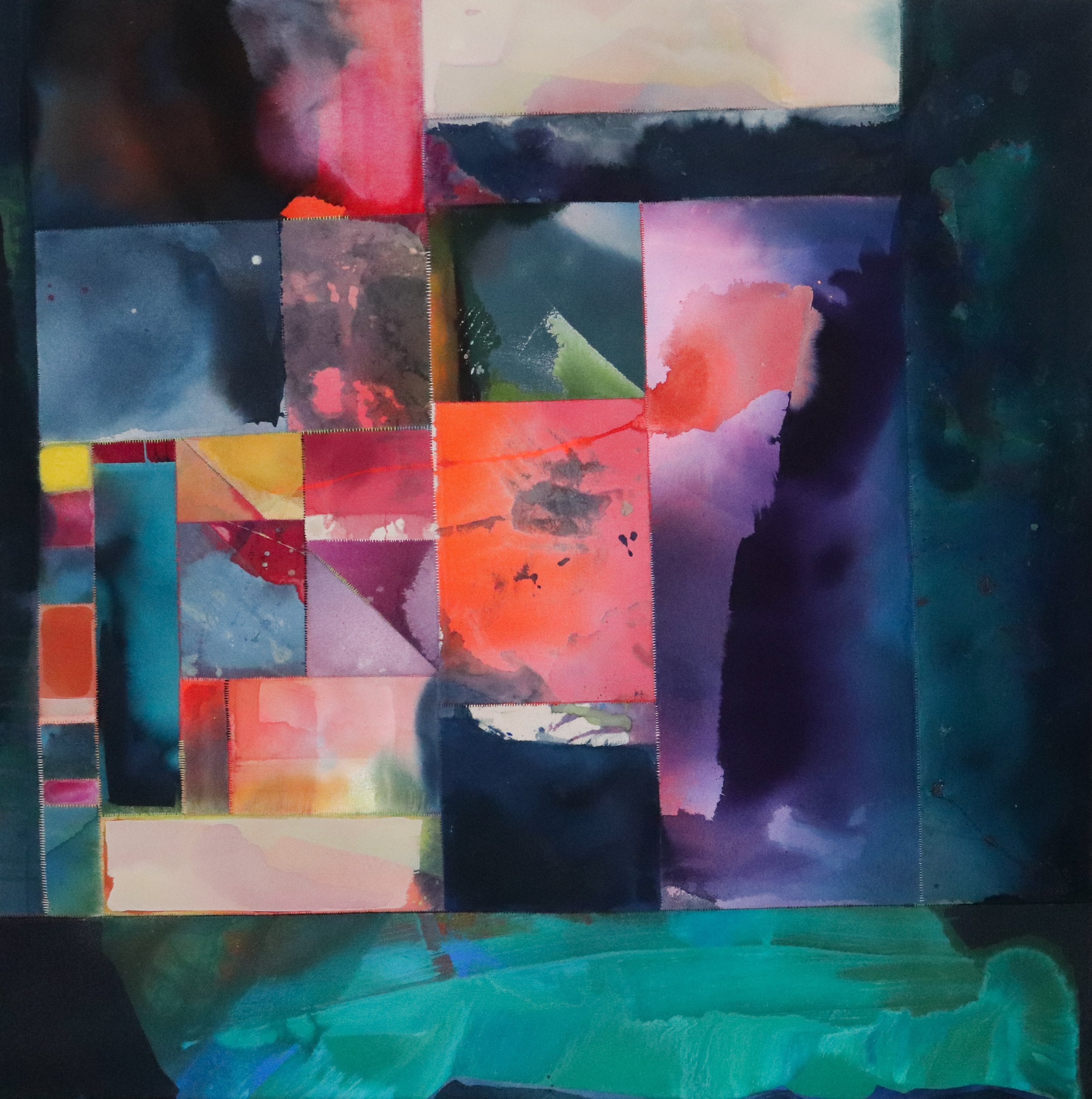
My practice sits at the intersection of painting and textile. While I identify as a painter, quilting gives me both structure and a way to think through the work: I use deconstructed paintings as my material and the quilt’s grid as a compositional armature. I begin by painting on large stretched canvases laid on the floor. Some pieces are cut up the same day, and others sit in the studio for months before they feel ready. My studio is a space for experimenting with diluted washes on raw canvas—building up color and texture through trial and error.
Painted canvases often show me when they belong together or are ready to be transformed through quilting. I keep reserves of canvas scraps from previous cut-up paintings, which I log in my mind and draw on during the quilting process. There’s a lot of freedom in this approach; I can paint without the pressure of resolving a composition on the stretched surface. Sometimes a single 12" × 12" section will connect to something I made months earlier, and without being precious about it, I can cut it apart and give it new life through quilting. These techniques let me use craft to further abstract the work and explore a sense of balance.
I hand-stitch with embroidery floss because a new texture emerges once the quilted canvas is stretched on a frame. I consciously choose to hand-stitch rather than use a machine: the tension, irregularity, and subtle imperfections of the human hand add a presence that a machine can’t replicate. From a distance, the seams are subtle, but up close they bring a tactile quality shaped by these irregularities. I often reference Midwestern quilt blocks and patterns in this part of my process. While I’m not a traditional quilter following all the construction rules (maybe a little punk??), I use these patterns as a compositional guide to help tie paintings together. Once the quilted canvas is stretched and the embroidery floss reveals itself, I often add a few more layers of paint when the composition calls for it. In a way, I start with paint and end with paint.
I grew up in the Midwest, and my extended family is from a rural farming town in Iowa. I’m interested in bringing domestic craft elements into my studio practice, drawing from the creative and practical skills my parents and parents’ parents grew up around. These crafts weren’t strictly gendered in my family—my maternal grandfather was quite the sewist—so using them in my work feels like a way to honor the mix of utility and creativity my relatives expressed through their hands in everyday life.