Silent Monitor is a public art installation by Emily Quandahl that takes its name and form from a surveillance tool used by industrialist Robert Owen in his early 19th-century textile mills. Owen's original monitor was a small four-sided wooden block hung above each worker's station, turned daily to display one of four colors—black, blue, yellow, or white—publicly rating the worker's conduct with no means for the worker to respond. Quandahl's installation translates that object from a private, portable device into a fixed, walkable space, asking what happens to a system of judgment once it can no longer move.
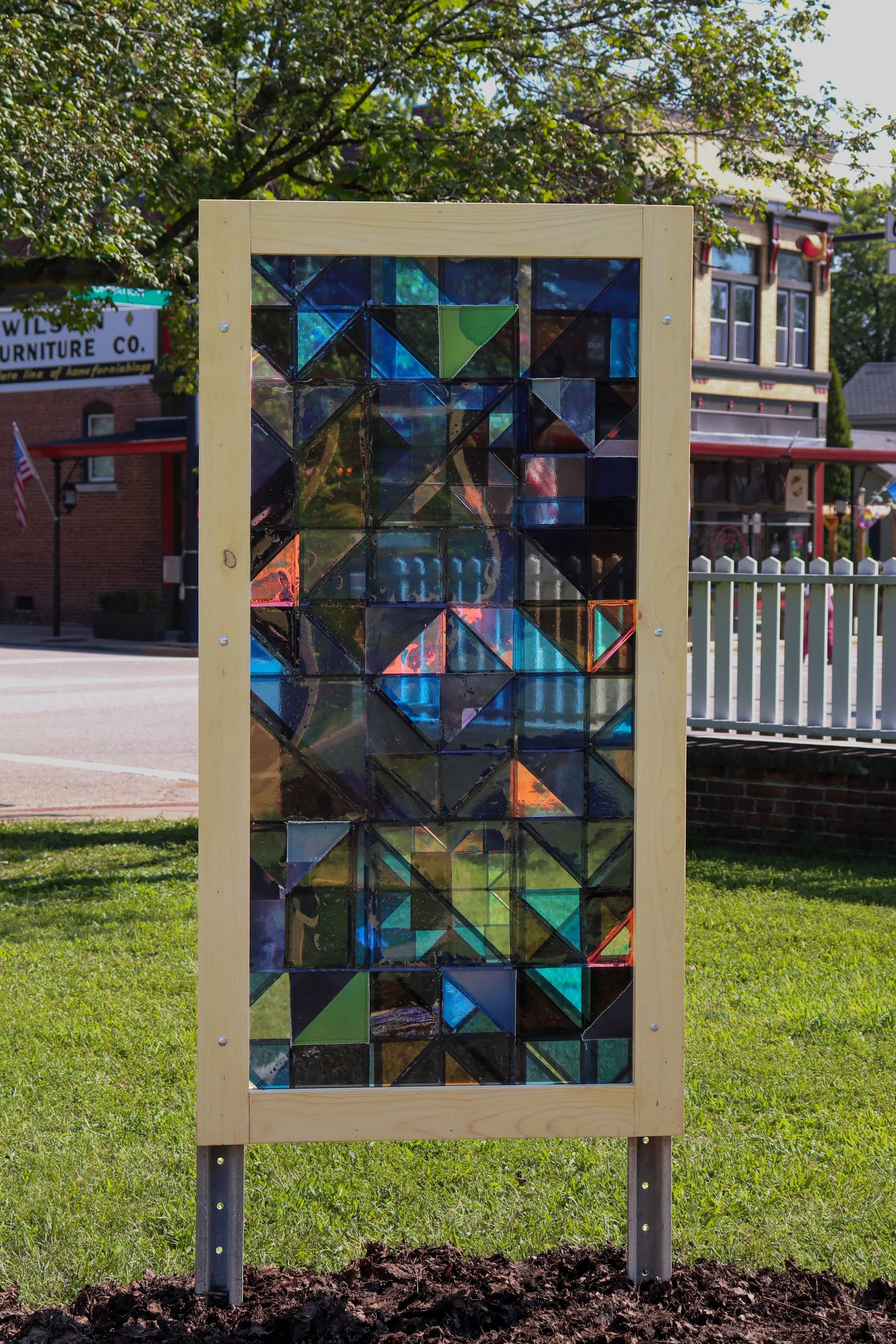
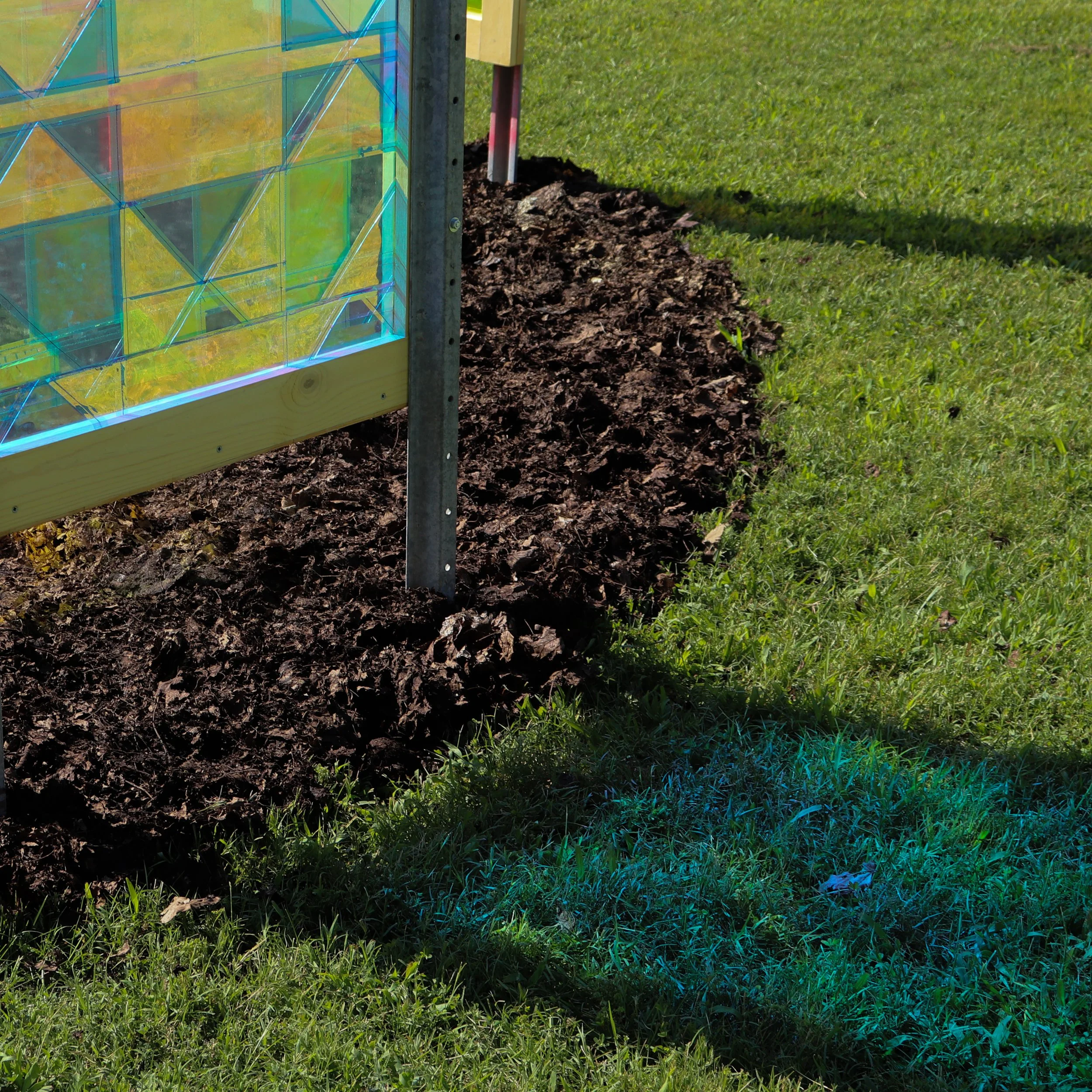
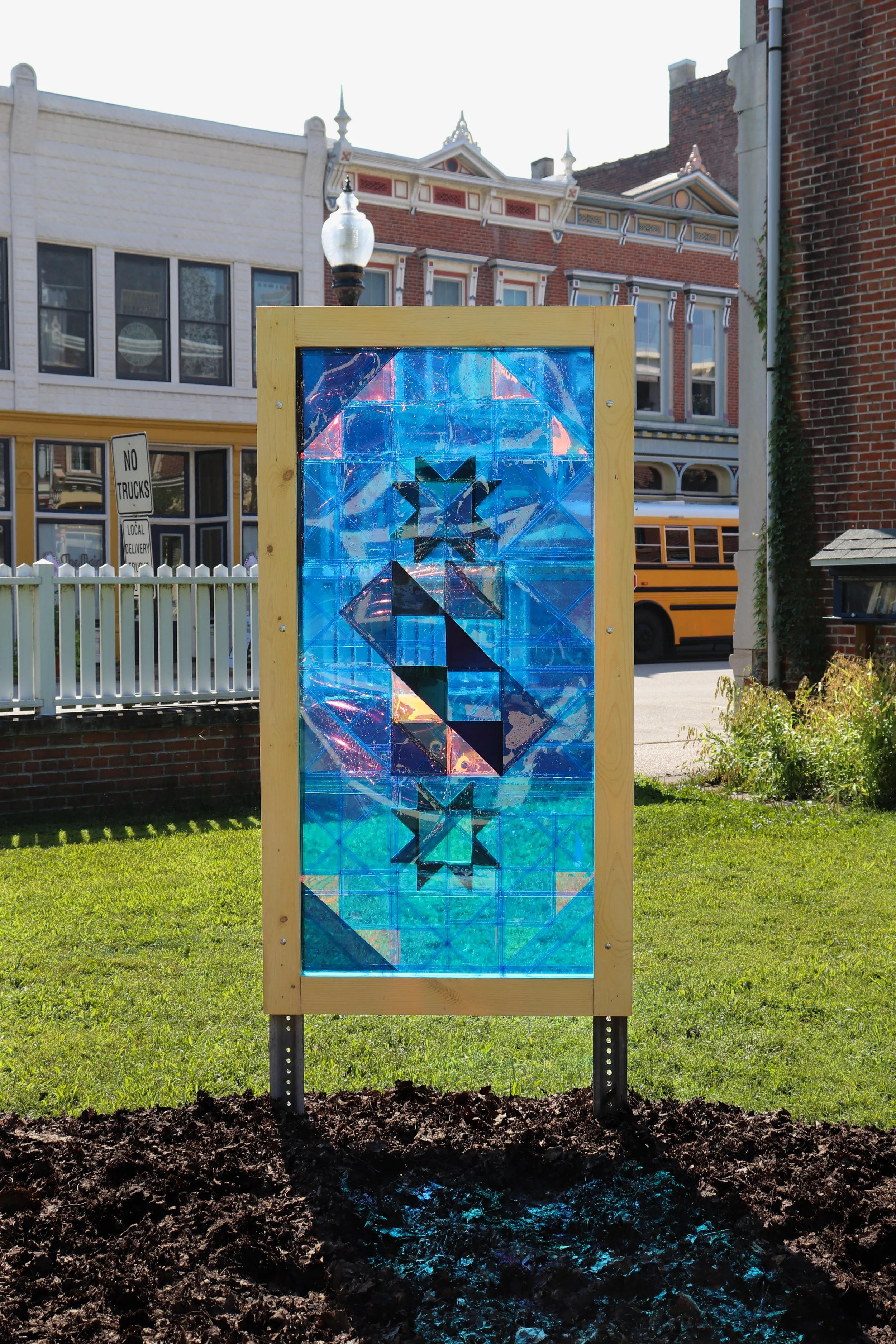
Four panels, each 2.5 feet wide and 5 feet tall, stand independently on 8-foot sign posts set 1.5 feet into the ground with cement, facing outward across the site and suggesting the four faces of the original monitor without closing into a single object. Each panel is machine-sewn vinyl, built to hold its shape outdoors, interwoven with hand-stitched canvas from Quandahl's studio—painted scraps and fragments of earlier work that carry the irregularity of the hand.
Viewed from outside, the panels read as tactile, quilted color. Stepping into the gaps between them—gaps left open to the sky and to the changing light of the day—the same panels become an enclosure, surrounding the visitor on four sides at once. The palette responds to Owen's original four colors but moves freely from them, drawn instead from Quandahl's studio practice. Where Owen's monitor reduced a worker to a single color on a given day, Quandahl's version holds multiple colors and surfaces at once, and lets the viewer, rather than the object, decide where to stand.
Installed at Maclure Square in Historic New Harmony, Indiana, on view August 25 through November 30, 2026, as part of the New Harmony Gallery of Contemporary Art's presentation of Silent Monitor, curated by Audra Verona Lambert.